Teaching Children to Spot AI-Generated Content and Deepfakes

Children spend a large part of their day online. They watch videos, browse social media, play games, and search for information for school projects. While the internet offers many learning opportunities, it also brings new challenges. One growing concern involves AI-generated content and deepfakes. These digital creations can look and sound real, making it difficult for young users to tell the difference between facts and fiction.
Children often trust what they see on a screen. A fake video, altered image, or AI-written story can easily mislead them. Parents and teachers need to help children build strong digital awareness skills. When children learn how to identify suspicious content, they become smarter internet users and make better decisions online. Understanding AI-generated content and deepfakes has become an important part of modern digital education.
Teaching Children to Spot AI-Generated Content and Deepfakes
Teaching children to recognize AI-generated content starts with simple explanations. Children do not need advanced technical knowledge. They need practical skills that help them question what they see online.
Explain What AI-Generated Content Means
Start with a basic definition. Tell children that AI-generated content includes text, images, videos, and voices created by computer programs.
Examples include:
- AI-written stories
- Computer-generated artwork
- Fake celebrity videos
- Artificial voice recordings
- Altered photographs
Use age-appropriate examples so children can understand the concept without feeling overwhelmed.
Teach Children to Question Online Content
Many children assume online content tells the truth. Encourage them to ask questions before believing anything they see.
Important questions include:
- Who created this content?
- Where did it come from?
- Can I find the same information elsewhere?
- Does anything look strange or unusual?
- Does the source seem trustworthy?
Questioning information helps children develop critical thinking skills.
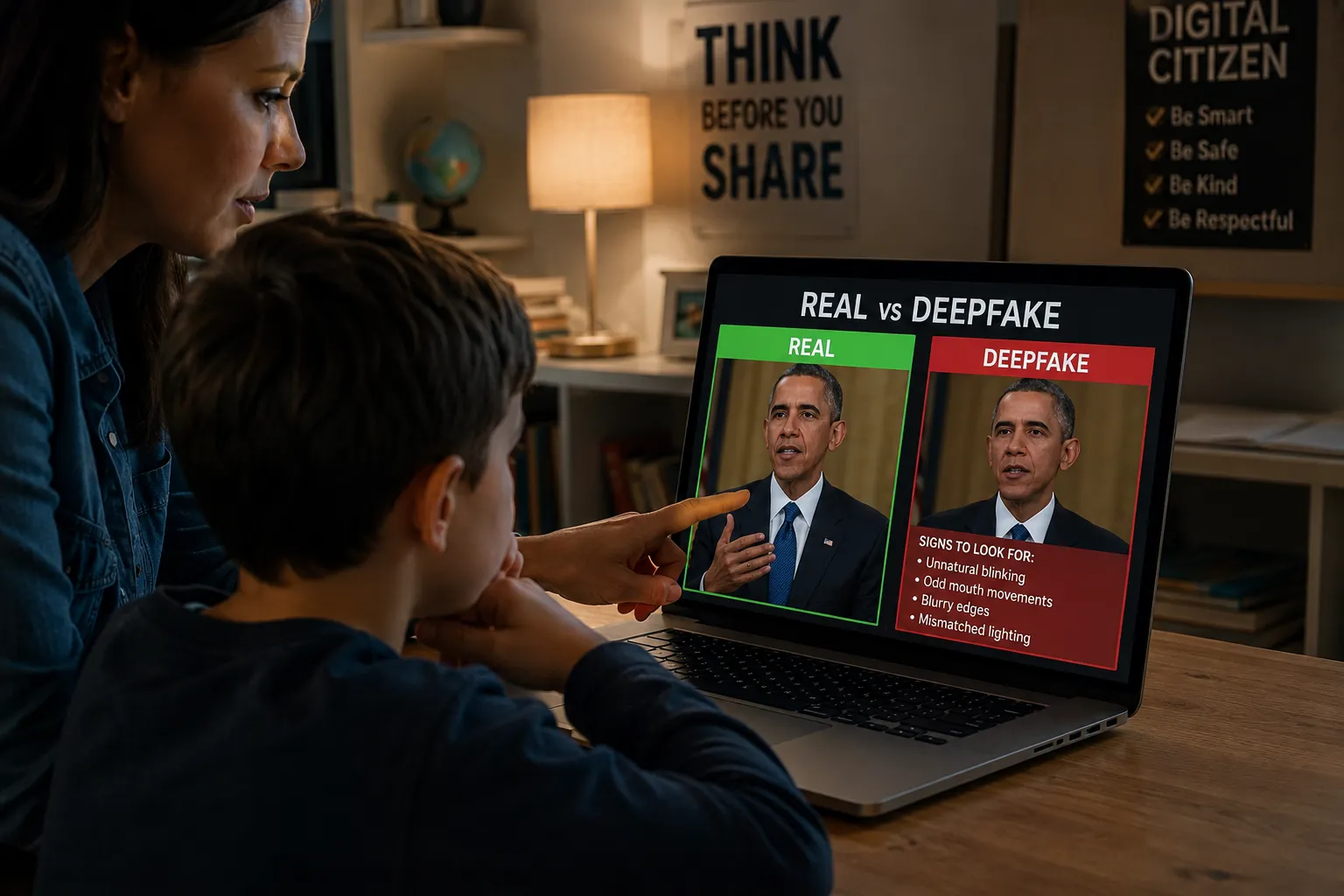
Show Common Signs of Deepfakes
Deepfakes often contain small mistakes that reveal manipulation.
Teach children to look for:
- Unnatural facial movements
- Lip movements that do not match speech
- Blurry edges around faces
- Strange lighting effects
- Unusual eye blinking
- Distorted backgrounds
- Robotic voice patterns
Practice by reviewing examples together and discussing what looks suspicious.
Encourage Source Verification
Children should learn to check multiple sources before accepting information as true.
Good verification habits include:
- Searching for the same story on reputable news websites
- Comparing information across different platforms
- Checking publication dates
- Looking for official statements
Source verification reduces the chances of believing false information.
Discuss Why People Create Deepfakes
Children often understand risks better when they know the reasons behind them.
People create deepfakes for:
- Entertainment
- Online pranks
- Advertising
- Political influence
- Scams
- Misinformation campaigns
Understanding these motives helps children stay alert.
Practice With Real-Life Examples
Hands-on learning works better than lectures.
Try activities such as:
- Comparing real and AI-generated images
- Identifying suspicious videos
- Discussing viral social media posts
- Reviewing fake headlines
Regular practice strengthens observation skills.
Why Digital Literacy Matters for Children
Digital literacy goes beyond using devices. It involves understanding how online information works and how to evaluate it responsibly.
Children with strong digital literacy skills can:
- Identify misleading content
- Avoid online scams
- Make informed decisions
- Protect their personal information
- Communicate responsibly online
As AI tools become more common, digital literacy becomes just as important as reading and writing.
Building Critical Thinking Skills
Critical thinking helps children analyze information rather than accepting it immediately.
Parents and teachers can encourage critical thinking by asking:
- What evidence supports this claim?
- Could someone have altered this image?
- Why would someone share this content?
- Does this information make sense?
These discussions help children become thoughtful internet users.
The Role of Parents in Teaching Online Safety
Parents play a major role in helping children understand digital risks.
Create Open Conversations
Children should feel comfortable discussing online experiences.
Ask questions such as:
- What videos did you watch today?
- Did you see anything confusing online?
- Has anyone shared unusual content with you?
Regular conversations create trust and encourage children to seek guidance when needed.
Learn Alongside Your Child
Technology changes quickly. Parents do not need to know everything.
Instead:
- Explore new apps together
- Watch educational videos about online safety
- Discuss recent internet trends
- Learn about emerging AI tools
Shared learning creates stronger digital habits.
Set Healthy Screen Rules
Balanced internet use reduces exposure to misleading content.
Consider rules such as:
- Limiting screen time
- Using age-appropriate platforms
- Supervising younger children
- Encouraging offline activities
Healthy habits support safer online experiences.
The Role of Schools in Teaching AI Awareness
Schools can strengthen digital education by including AI awareness lessons in the classroom.
Integrate Digital Media Education
Teachers can incorporate lessons that cover:
- Online fact-checking
- Media bias
- AI-generated content
- Deepfake recognition
- Responsible social media use
These lessons prepare students for modern digital challenges.
Use Classroom Activities
Interactive activities often improve learning outcomes.
Examples include:
- Fact-checking exercises
- Group discussions
- Image analysis projects
- Video comparison activities
Students learn faster when they actively participate.
Encourage Responsible Sharing
Children frequently share content without checking its accuracy.
Teachers can promote simple rules:
- Verify before sharing.
- Check the source.
- Ask questions.
- Think about possible consequences.
Responsible sharing helps reduce the spread of misinformation.
Common Risks Associated With Deepfakes
Deepfakes can affect children in several ways.
Misinformation
False videos and images can spread incorrect information quickly.
Cyberbullying
Some individuals use deepfake technology to create embarrassing or harmful content targeting others.
Online Scams
Scammers may use fake voices or videos to trick people into sharing money or personal information.
Emotional Manipulation
Children may believe false stories that trigger fear, anger, or confusion.
Teaching awareness reduces these risks and promotes safer online behavior.
Practical Activities to Teach Deepfake Detection
Parents and educators can use engaging activities to reinforce learning.
Image Detective Game
Show several images and ask children to identify signs of editing or manipulation.
Fact-Checking Challenge
Provide a news story and ask children to verify it using trusted sources.
Video Observation Exercise
Watch videos together and discuss whether any elements seem unusual.
Source Hunt Activity
Ask children to trace the original source of a viral post.
These activities make learning enjoyable while building valuable skills.
Preparing Children for an AI-Driven Future
AI technology will continue to influence education, communication, and entertainment. Children need the skills to interact with these tools responsibly.
Key skills include:
- Critical thinking
- Source evaluation
- Media literacy
- Digital responsibility
- Online safety awareness
Children who develop these skills can use technology confidently while avoiding common digital traps.
F.A.Q
What is AI-generated content?
AI-generated content includes text, images, videos, and audio created by computer programs.
What is a deepfake?
A deepfake is a manipulated video, image, or audio recording designed to appear real.
Why should children learn about deepfakes?
Children need this knowledge to avoid misinformation and make safer online decisions.
How can children identify a deepfake video?
They can look for unnatural movements, strange lighting, and mismatched lip synchronization.
What age should children start learning about online misinformation?
Children can begin learning basic digital literacy skills as soon as they start using the internet.
Can deepfakes be harmful?
Yes, deepfakes can spread false information, support scams, and contribute to cyberbullying.
How can parents help children verify online content?
Parents can encourage source checking, fact verification, and discussions about suspicious content.