AI Homework Helpers: How Much Assistance Is Too Much?

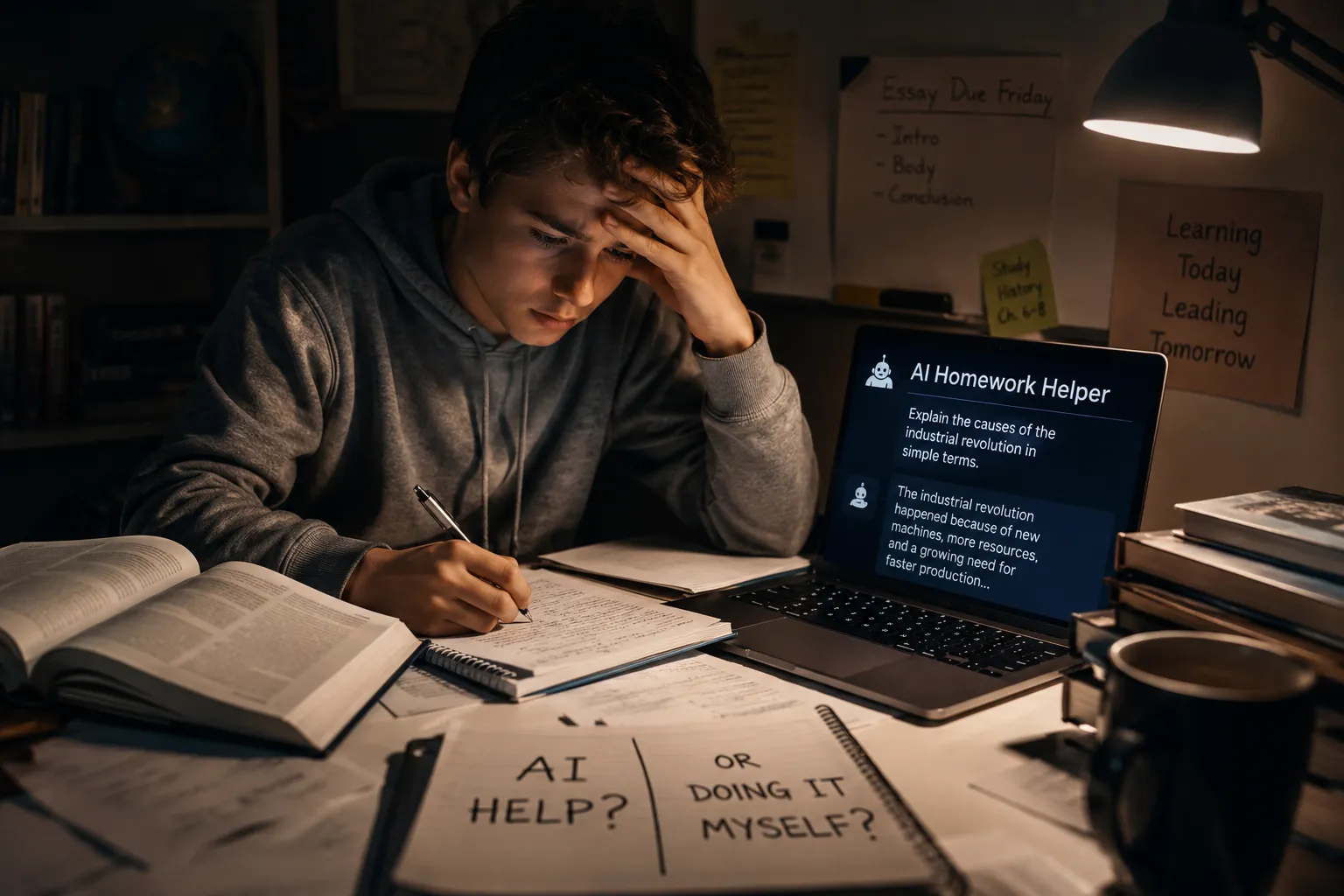
Artificial intelligence has changed the way students learn, research, and complete assignments. Many students now use AI homework helpers to explain difficult concepts, solve math problems, check grammar, and generate ideas for essays. These tools can save time and reduce frustration when students struggle with schoolwork.
At the same time, many parents, teachers, and education experts worry about how far students should rely on these tools. While AI can support learning, excessive dependence can weaken critical thinking and problem-solving skills. Students may start copying answers instead of understanding the material. The real challenge lies in finding the right balance between using AI as a learning aid and maintaining independent learning habits. Understanding where that balance exists can help students gain the benefits of AI without harming their education.
AI Homework Helpers: How Much Assistance Is Too Much?
AI homework helpers can provide valuable support when students use them correctly. Problems arise when students allow AI to complete most or all of their work.
The key question is simple: Does the student still engage in the learning process?
If AI helps students understand concepts and improve their skills, it serves a useful purpose. If AI replaces thinking and learning, it becomes a problem.
Healthy Ways to Use AI Homework Helpers
Students can use AI effectively in several situations:
- Explaining difficult concepts in simple language
- Providing examples of how to solve problems
- Checking grammar and spelling mistakes
- Offering study guides and summaries
- Helping organize essays and projects
- Creating practice questions for exams
These uses support learning because students still participate actively in the process.
Signs That AI Assistance Has Become Too Much
Students may cross the line when they:
- Submit AI-generated work without reviewing it.
- Copy answers directly from AI tools.
- Depend on AI for every assignment.
- Avoid reading textbooks or class materials.
- Stop developing research and writing skills.
- Use AI during tests or restricted assessments.
When students follow these habits, they miss important opportunities to build knowledge and confidence.
Why Independent Thinking Still Matters
Education teaches more than facts and formulas. It helps students develop skills they will use throughout life.
These skills include:
- Critical thinking
- Problem-solving
- Decision-making
- Creativity
- Communication
- Research abilities
Students strengthen these abilities through practice. If AI performs every task, students lose valuable learning experiences.
For example, writing an essay requires planning, analyzing information, forming arguments, and expressing ideas clearly. If AI writes the entire essay, the student misses the chance to improve these skills.
The Difference Between Assistance and Dependence
Many people compare AI homework helpers to calculators.
A calculator helps students perform calculations faster after they understand mathematical concepts. It does not replace mathematical understanding.
AI should work in a similar way. It should support learning rather than replace it.
Consider these examples:
Appropriate Use
- Asking AI to explain algebra formulas
- Requesting feedback on a draft essay
- Generating practice quiz questions
Excessive Use
- Asking AI to complete an entire assignment
- Submitting AI-generated essays as personal work
- Copying AI responses without verification
The first group supports education. The second group weakens it.
Benefits of AI Homework Helpers
When students use AI responsibly, they can gain several advantages.
Faster Understanding of Difficult Topics
Students often struggle with complicated lessons. AI can explain concepts using simpler language and different examples.
This approach can help students understand topics that seem confusing in the classroom.
Personalized Learning Support
Every student learns differently. AI can adapt explanations based on individual needs.
A student may ask for:
- Short explanations
- Detailed breakdowns
- Real-world examples
- Step-by-step solutions
This flexibility can improve learning outcomes.
Increased Study Efficiency
Students often spend hours searching for information. AI can quickly summarize materials and point students toward useful resources.
As a result, students can spend more time practicing and less time searching.
Support for Students with Learning Challenges
Some students face difficulties with reading, writing, or organization.
AI tools can assist by:
- Simplifying complex text
- Correcting grammar
- Creating study notes
- Organizing information
These features can make learning more accessible.
Risks of Overusing AI in Education
Despite its benefits, excessive AI use creates several concerns.
Reduced Critical Thinking Skills
Students strengthen critical thinking through analysis and problem-solving.
If AI provides every answer immediately, students may stop asking questions and evaluating information independently.
Lower Academic Integrity
Many schools consider submitting AI-generated work without disclosure a form of academic dishonesty.
Students who rely heavily on AI risk violating school policies and damaging their academic reputation.
Weak Research Skills
Research requires students to:
- Evaluate sources
- Compare viewpoints
- Verify information
- Draw conclusions
AI shortcuts can reduce opportunities to practice these skills.
Dependence on Technology
Students who become dependent on AI may struggle when technology is unavailable.
They may find it difficult to complete exams, classroom assignments, or professional tasks that require independent thinking.
How Students Can Use AI Responsibly
Responsible use allows students to benefit from AI while continuing to learn effectively.
Use AI as a Tutor
Treat AI as a teacher rather than an answer machine.
Ask questions such as:
- Can you explain this concept?
- Why is this answer correct?
- Can you show another example?
This approach promotes understanding.
Verify Information
AI can occasionally provide inaccurate information.
Students should always:
- Check facts
- Compare sources
- Review textbook materials
- Confirm important details
Verification helps maintain accuracy.
Complete the Final Work Yourself
Students should write their own essays, solve problems independently, and create original assignments.
AI can provide guidance, but students should produce the final work.
Follow School Policies
Many schools have specific rules regarding AI use.
Students should understand:
- What is allowed
- What requires disclosure
- What counts as misconduct
Following these guidelines protects academic integrity.
The Role of Parents and Teachers
Parents and teachers play an important role in helping students use AI wisely.
They can:
- Discuss responsible technology use
- Encourage independent learning
- Monitor homework habits
- Teach critical thinking skills
- Set clear expectations
Open communication helps students understand both the benefits and limitations of AI tools.
The Future of AI in Homework and Learning
AI will likely become a regular part of education. Schools, universities, and employers already recognize its growing influence.
Future success will depend on teaching students how to use AI responsibly rather than banning it entirely.
Students who learn to combine AI assistance with strong thinking skills will likely gain the greatest advantage. They will know how to use technology while still developing the knowledge and abilities needed for long-term success.
F.A.Q
What are AI homework helpers?
AI homework helpers are digital tools that assist students with learning, research, writing, and problem-solving.
Can AI improve academic performance?
Yes, AI can improve understanding and study efficiency when students use it responsibly.
Is using AI for homework considered cheating?
It depends on school policies and how the student uses the tool.
Should students copy AI-generated answers?
No, students should understand the material and create their own work.
Can AI replace teachers?
No, teachers provide guidance, feedback, and human interaction that AI cannot fully replace.
What is the biggest risk of using AI for homework?
Excessive reliance on AI can weaken critical thinking and independent learning skills.
How can students use AI responsibly?
Students should use AI for guidance, learning support, and feedback while completing their own assignments.